
The European Employment and Social Rights Forum 2026 (EU Social Forum) brought together policymakers, social partners, businesses, academics and civil society to discuss how Europe can strengthen its social model while adapting to rapid technological change, global competition and evolving labour markets.
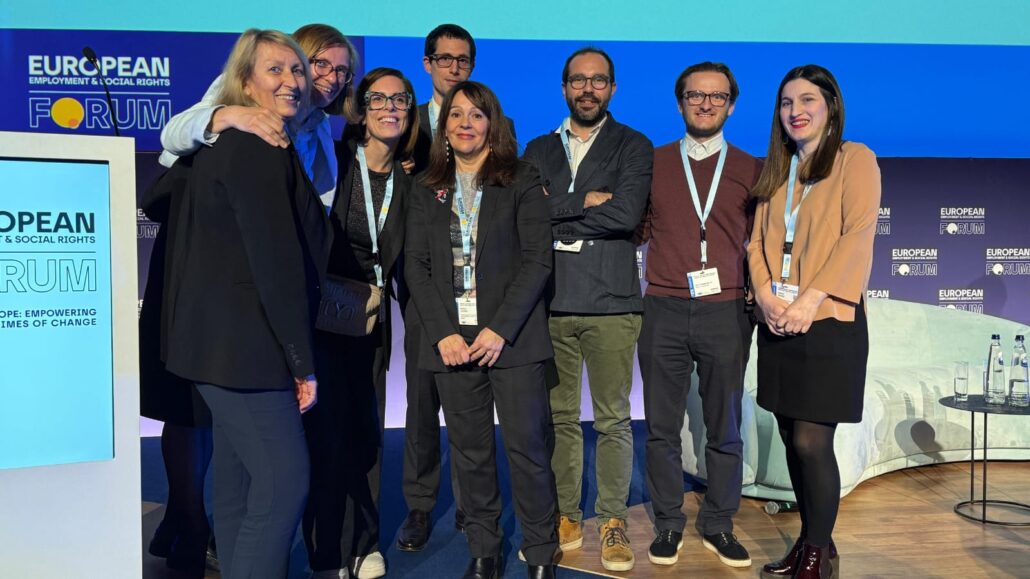
Held in Brussels and with hybrid participation from across Europe, the event — organised by the European Commission’s Directorate-General for Employment, Social Affairs and Inclusion — focused on three key pillars: quality jobs, the fight against poverty and fair labour mobility. Across all discussions, one theme stood out clearly: skills and human capital will be decisive for Europe’s competitiveness and social cohesion in the years ahead.
The EU Social Forum opened with remarks by Roxana Mînzatu, Executive Vice-President for Social Rights and Skills, followed by a keynote address from Ursula von der Leyen, President of the European Commission.
Von der Leyen emphasised the strong interconnection between economic and social priorities, calling for “a Social Europe in a Competitive Europe.” She reflected on Europe’s resilience through recent crises, highlighting how EU action helped protect jobs during the COVID-19 pandemic and supported investment in skills and training for the twin green and digital transitions through NextGenerationEU.
At the same time, she acknowledged the scale of ongoing structural change, with artificial intelligence, industrial transformation and demographic shifts reshaping labour markets across Europe.
To address these challenges, the Commission outlined three strategic priorities:
- Completing the Single Market, by reducing fragmentation and facilitating cross-border economic activity, including initiatives such as the upcoming EU Ink digital company registration system and the Fair Mobility Package.
- Strengthening skills and quality jobs, through initiatives such as the Union of Skills, the proposed Future Skills Guarantee, and the forthcoming Quality Jobs Act, aimed at supporting both workers and European competitiveness.
- Improving affordability, including measures such as the upcoming Affordable Housing Action Plan, recognising that economic security is essential for social stability and labour mobility.
Skills, Labour Markets and the Human Dimension of Transformation
Throughout the EU Social Forum, high-level discussions highlighted how digitalisation, demographic change and global economic pressures are transforming the nature of work and social protection systems.
The opening plenary featured leading figures from European and international institutions, including Enrico Letta, Yolanda Díaz, Li Andersson, Esther Lynch, Markus J. Beyrer, Maria Nyman, Olivier De Schutter, Sidsel Marie Kristensen and Mario Nava. Their discussions explored how labour market transitions can remain inclusive, fair and human-centred.
An inspiring contribution came from Vincent Kompany, former professional footballer and current coach, who highlighted the role of education, resilience and teamwork in empowering young people. His intervention illustrated how skills development, lifelong learning and personal growth extend far beyond traditional labour market frameworks and are essential for social cohesion and individual opportunity.
LCAMP at the EU Social Forum
LCAMP was represented at the Forum by Iñigo Araiztegui, LCAMP Project Coordinator, and Noelia Cantero, representing LCAMP’s Communications Manager. LCAMP actively engaged in discussions around skills, lifelong learning, and workforce transformation, reflecting the project’s commitment to fostering human capital and preparing Europe’s workforce for industrial and technological change.
Strengthening Europe’s Skills Ecosystem
The second day of the EU Social Forum focused on more specialised discussions through policy breakout sessions. Among these, the Pact for Skills sessions explored how stronger cooperation between industry, training providers, public authorities and social partners can address Europe’s growing skills shortages.
Key discussions focused on:
- Anticipating future skills needs in rapidly evolving sectors
- Closing the skills gap to support Europe’s competitiveness
- Strengthening links between the Pact for Skills and the Clean Industrial Deal
Participants emphasised the importance of long-term investment in workforce development, improved skills intelligence, and innovative approaches to upskilling and reskilling that support both workers and businesses in times of transition.
Other breakout discussions addressed broader labour market and social policy challenges, including the forthcoming EU Anti-Poverty Strategy, support for NEETs through the ALMA initiative, microfinance and financial inclusion, social protection for ageing societies, and fair labour mobility across Europe.
Towards a New Social Human Capital Model
Ahead of the breakout sessions, Ylva Johansson, newly appointed Chair of the European Skills High-Level Board, delivered a key message on the future of Europe’s skills agenda.
She stressed that Europe must significantly increase adult participation in lifelong learning, rising from current levels below 40% to the EU target of 60% by 2030, as outlined in the European Pillar of Social Rights Action Plan.
Johansson highlighted several priorities for strengthening Europe’s human capital:
- reinforcing basic skills and education systems
- improving alignment between education and labour market needs
- increasing investment in adult learning and reskilling
- making better use of existing skills and competences across the workforce
She also introduced the vision of a “New Social Human Capital model”, recognising that Europe must not only develop new skills but also unlock and fully utilise the potential already present in its workforce.
The EU Social Forum 2026 concluded with a strong message: Europe’s future competitiveness and social resilience depend on investing in people.
As technological change, demographic shifts and industrial transformation accelerate, strengthening skills systems, lifelong learning opportunities and workforce adaptability will be essential to ensure that Europe’s transitions remain inclusive, fair and human-centred.
Events such as the EU Social Forum provide an important platform for dialogue and collaboration, helping shape policies that connect social rights, labour market transformation and the development of Europe’s human capital.