
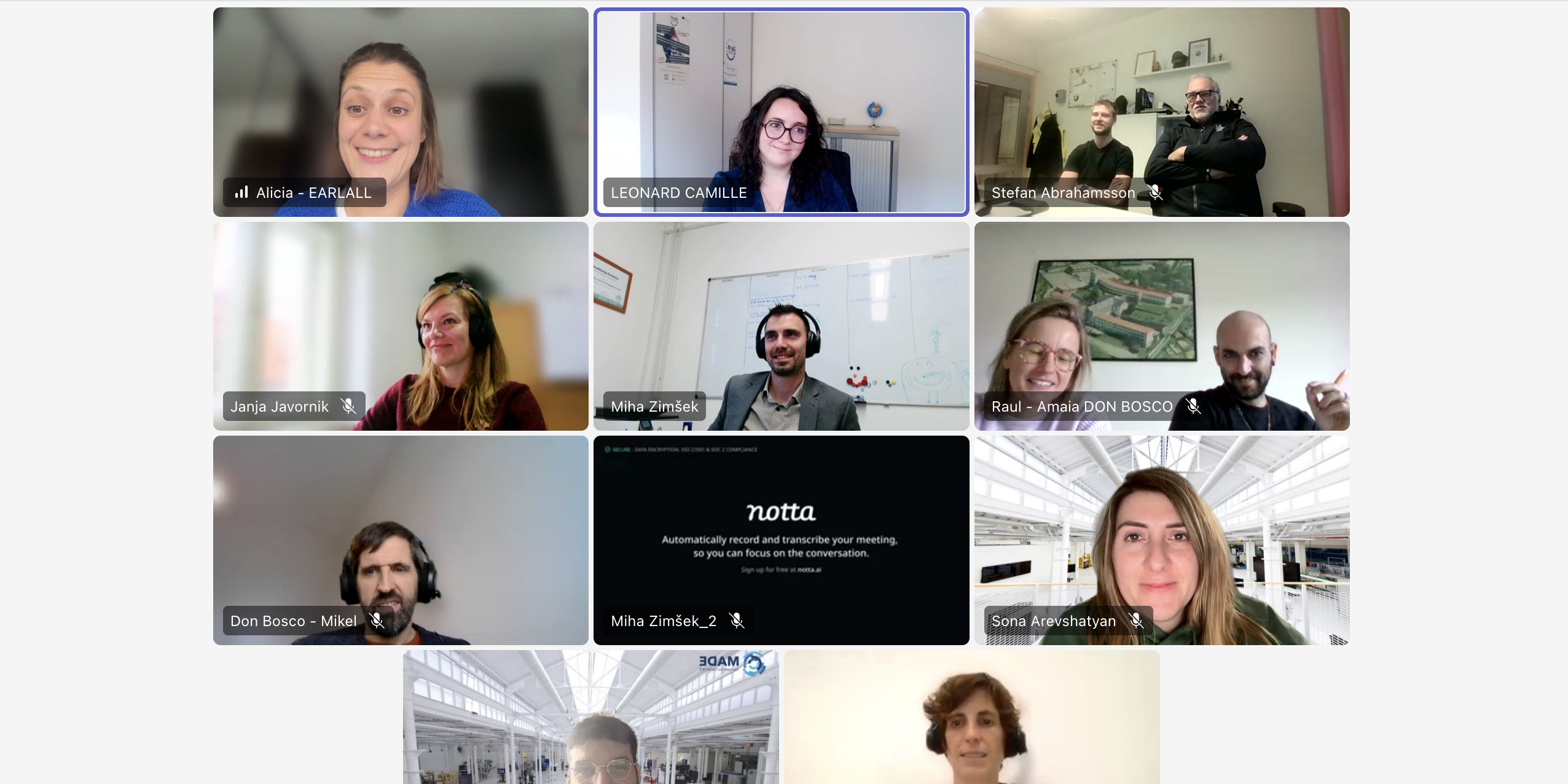
A new European Erasmus+ project brings together organisations with previous experience in LCAMP to address the underrepresentation of women in technology-related vocational education and training (VET), particularly in Advanced Manufacturing and Information and Communication Technologies (ICT).
Women remain underrepresented in many technology-related educational pathways and professional fields, despite the growing demand for digital and advanced manufacturing skills. Addressing this gap requires more than encouraging women to enter technical education: it also means understanding the barriers they face and creating learning environments in which they can develop their skills, confidence and career opportunities.
This is the challenge addressed by Women in Technology, a new European cooperation project bringing together six organisations from France, Belgium, Sweden, Italy, Spain and Slovenia. The partnership builds on previous European cooperation between several organisations involved in LCAMP (Learner-Centric Advanced Manufacturing Platform), demonstrating how relationships and knowledge developed through European projects can provide a foundation for further collaboration.
Continuing European cooperation beyond LCAMP
Coordinated by Campus des Métiers et des Qualifications de l’Industrie du Futur (France), the Women in Technology partnership includes:
- Campus des Métiers et des Qualifications de l’Industrie du Futur – France (Coordinator)
- European Association of Regional and Local Authorities for Lifelong Learning (EARLALL) – Belgium
- Curt Nicolin Gymnasiet – Sweden
- MADE S.C. a R.L. Competence Center Industry 4.0 – Italy
- CIFP Don Bosco LHII – Spain
- Skupnost višjih strokovnih šol Republike Slovenije – Slovenia
Several of these organisations previously worked together through LCAMP, a European initiative focused on learner-centred approaches and the transformation of advanced manufacturing education and training.
The new project builds on this experience and established cooperation, extending the partners’ work to another important dimension of the future of VET: making technology-related learning and career pathways more accessible and attractive to women.
Supported by the Erasmus+ Cooperation Partnerships in Vocational Education and Training (KA220-VET), Women in Technology has a total budget of €400,000 and will run for 36 months, from 1 October 2026 to 30 September 2029. The project officially kicked off on 10 November 2026, with the first in-person partnership meeting scheduled to take place in Rodez, France, on 12–13 January 2027.
Tackling the gender gap in Advanced Manufacturing and ICT
Gender stereotypes, limited visibility of female role models, confidence gaps and institutional practices can all influence women’s decisions to pursue technical education and their experiences within training environments.
Women in Technology aims to better understand these challenges and translate the findings into practical solutions for VET institutions and industry. Its work will focus on three main objectives:
- Understanding barriers and motivations: gathering evidence on the factors influencing women’s participation in technology-oriented VET, drawing on the experiences of learners, educators and industry representatives.
- Developing inclusive training approaches: creating an Inclusive Industry-Integrated Model combining gender-sensitive teaching practices with stronger cooperation between VET providers and companies.
- Testing and sharing practical solutions: piloting the model in partner countries, evaluating its effectiveness and supporting its wider adoption by other VET institutions.
From research to practical solutions for VET institutions
The project will follow a process combining research, educational development and practical experimentation.
First, partners will establish a Skills and Inclusion Observatory, using surveys and interviews with female VET learners, educators and industry representatives to identify the barriers and factors influencing women’s participation in Advanced Manufacturing and ICT. The findings will be brought together in a comparative report and a practical toolkit.
Based on this evidence, the partnership will develop an Inclusive Industry-Integrated Model providing guidance and tools for VET institutions and companies. It will include gender-sensitive teaching approaches, structured cooperation with industry, mentoring activities and opportunities for learners to engage with technology professionals and female role models.
The model will then be tested through pilot activities in the partner countries. Workshops, mentoring and practical projects will allow learners and educators to experiment with the proposed approaches in real training environments. The results will inform further improvements and help identify good practices that can be shared across Europe.
The project will also develop a Digital Knowledge Hub and a Sustainability Framework to support the accessibility and continued use of its results beyond the project lifetime.
A shared challenge for the LCAMP community
The transition towards more digital, sustainable and advanced manufacturing requires a skilled and diverse workforce. Ensuring that women have equal opportunities to access technology-related education, develop their competences and pursue careers in the sector is therefore an important part of this transition.
The cooperation established through LCAMP illustrates the value of European partnerships in connecting VET institutions, industry, educational organisations and other stakeholders around shared challenges. Women in Technology continues this spirit of collaboration, bringing together organisations with previous experience of working together while addressing a new set of challenges.
By developing and testing practical approaches to more inclusive technical education, the project aims to strengthen the capacity of VET institutions, improve cooperation between education and industry, and encourage more women to choose and pursue careers in technology.
For the LCAMP Alliance community, this is another example of how European cooperation can generate lasting relationships, exchange of knowledge and new opportunities to address the evolving needs of advanced manufacturing education and training.